Trenchless vs. Traditional Sewer Repair in Denver: Cost, Timeline, and Best Use Cases
By Brothers Plumbing13 min read
Trenchless sewer repair costs $60 to $250 per linear foot in Denver and takes 1 to 2 days, with minimal yard disruption. Traditional open-cut repair costs $50 to $250 per linear foot but adds significant landscape restoration expense. Trenchless is best for most Denver homes with mature trees or finished yards; traditional is necessary for severely collapsed or misaligned pipes.
What Is the Difference Between Trenchless and Traditional Sewer Repair?
Both methods restore your sewer line to full working condition, but they reach that goal in completely different ways. Traditional open-cut repair has been the industry standard for over a century. A backhoe digs a trench 4 to 6 feet deep. It runs along the full length of the damaged pipe. The old material is removed. New PVC or ABS pipe is installed. The trench is backfilled in compacted lifts. Trenchless technology became widely available in the 1990s and has grown at nearly 7 percent annually as more property owners and utilities favor rehabilitation over full replacement (pmmag.com). Denver's housing stock adds important local context: a large share of homes were built before 1970, meaning clay, cast-iron, and even Orangeburg pipe are common in neighborhoods like Park Hill, Wash Park, and Congress Park. The pipe material and condition inside your walls largely determines which method is viable.
How Does Trenchless Pipe Lining (CIPP) Work?
Cured-In-Place Pipe lining, commonly called CIPP, is the most widely used trenchless method for residential sewer lines. A technician inserts a flexible liner through a single cleanout access point. The liner is saturated with epoxy or polyester resin. The liner is inflated against the existing pipe walls. It is held there while the resin cures. This forms a smooth, seamless new pipe inside the old one. The finished product is essentially a pipe within a pipe. CIPP works best on pipes that show cracking, root infiltration, or corrosion but still maintain their basic shape and alignment. The resin surface resists future root intrusion more effectively than the original clay or cast-iron material, making CIPP a long-term fix rather than a temporary patch. It stays fixed.
How Does Pipe Bursting Work?
Pipe bursting is a trenchless method suited for pipes that are too deteriorated for lining but where the surrounding soil remains stable. A hydraulic bursting head is pulled through the old pipe from one access point to another. It is slightly larger than the existing pipe's outer diameter. As it advances, it fractures the old pipe outward into the surrounding soil. It simultaneously pulls a new HDPE pipe into the void. Two access points are required, typically at each end of the damaged section. One practical advantage of pipe bursting over lining is the ability to upsize the pipe during replacement, giving homeowners the option to increase flow capacity at the same time. HDPE pipe is highly resistant to root intrusion, chemical corrosion, and ground movement, making it a durable long-term solution.
How Does Traditional Open-Cut Sewer Repair Work?
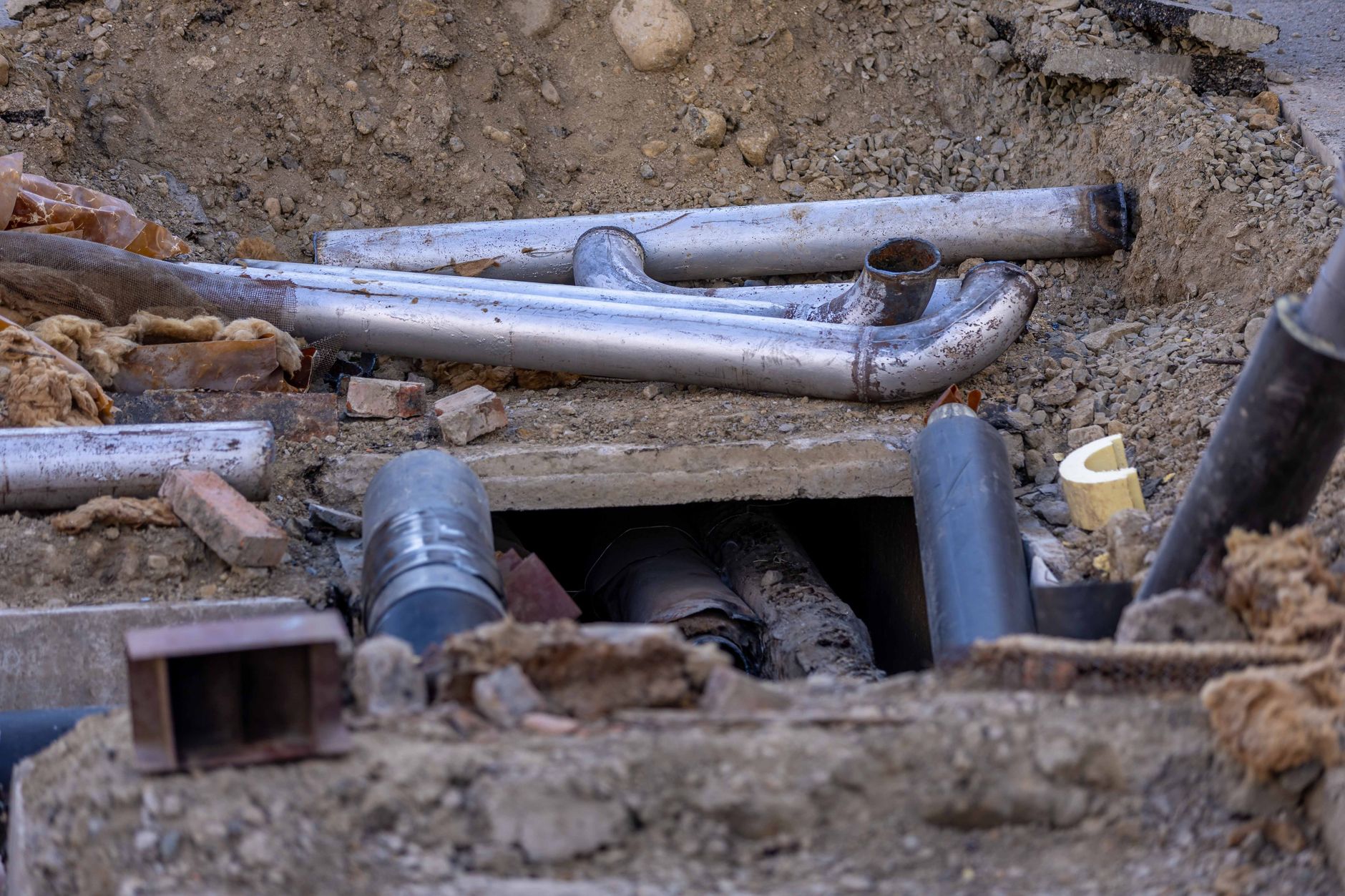
Traditional open-cut repair remains the only viable method for fully collapsed pipes, severely offset joints, or sections where the pipe has sunk and requires re-grading to restore proper drainage slope. A backhoe or excavator removes soil from the cleanout access point to the city main connection. This exposes the entire damaged section. Workers physically remove the old pipe, install new PVC or ABS, and backfill the trench in compacted lifts to minimize future settling. Every stage is visible to the inspector, which is an advantage when the surrounding soil condition or adjacent utility lines are uncertain. Denver Public Works typically requires building permits and inspections for full sewer line replacements, and the permit must be pulled before work begins.
How Do Trenchless and Traditional Sewer Repair Compare on Cost in Denver?
Cost is where the two methods diverge most dramatically, and the comparison is more nuanced than a simple per-foot rate suggests. Trenchless pipe lining runs $90 to $250 per linear foot for CIPP and $60 to $200 per linear foot for pipe bursting nationally (homeadvisor.com). Traditional open-cut replacement runs $50 to $250 per linear foot depending on depth, pipe material, and site conditions (homeguide.com). At first glance, traditional repair looks cheaper. The critical variable is what happens after the trench closes. Landscape restoration costs vary widely: a lawn installation averages $4,200 nationally, and a full backyard remodel averages $24,500 nationally (landscapingcostcalculator.com). Denver homes in older neighborhoods often have mature trees, decorative concrete, underground irrigation systems, and finished driveways directly over the sewer corridor. Traditional excavation disturbs those features. This can push the total project cost well above any per-foot pipe rate. Trenchless methods avoid nearly all of that restoration expense because access points are limited to one or two small holes. For most Denver homeowners with established yards, the total out-of-pocket cost for trenchless repair is comparable to or lower than traditional repair once restoration is factored in. Math wins here.
| Factor | Trenchless (Lining/Bursting) | Traditional Open-Cut |
|---|---|---|
| Labor cost per linear foot | $60-$250 | $50-$250 |
| Landscape restoration cost | $0-$500 | $1,000-$5,000+ |
| Typical total for 50-ft line | $4,000-$15,000 | $3,500-$12,500+ |
| Project timeline | 1-2 days | 2-5 days |
| Permit required (Denver) | Usually yes | Always yes |
| Yard excavation | Minimal (1-2 access holes) | Full trench, 4-6 ft deep |
| Pipe diameter after repair | Slightly reduced (lining) | Full size or larger |
| Best pipe condition | Cracked, corroded, root-infiltrated | Collapsed, misaligned, offset joints |
| Lifespan of repair | 50 years or more | 50+ years (PVC) |
| Disruption to daily life | Low | High |
What Hidden Costs Should Denver Homeowners Watch For?
The per-foot pipe rate is only the starting point. Denver building permits for sewer work add $100 to $500 depending on project scope (tnstandard.com). A video camera inspection before repair typically costs $150 to $400, but it is the only reliable way to confirm which method is appropriate for your specific pipe. Skipping this step and discovering mid-project that lining is not viable because the pipe has collapsed is far more expensive than the inspection fee. For traditional jobs, concrete or asphalt cutting and patching adds $500 to $3,000 when the sewer line runs under a driveway or public sidewalk. Utility locating fees also apply when excavation is near gas, electric, or water lines. At Brothers Plumbing, we provide flat-rate written quotes that itemize all of these line items before a shovel touches the ground, so Denver homeowners are never surprised by costs that appear only on the final invoice.
Which Repair Method Is Faster: Trenchless or Traditional?
Speed is a genuine differentiator, not just a marketing claim. Trenchless pipe lining or pipe bursting for a typical Denver residential sewer line is completed in 1 to 2 days from start to finish. Speed matters. Traditional open-cut repair for the same line typically requires 2 to 5 working days for the pipe work alone, before any landscape restoration begins. The International Code Council notes that trenchless methods typically cut project timelines by 30 to 50 percent compared to traditional excavation (pmmag.com). For Denver homeowners, speed translates directly to how long your household is without full plumbing use and how long vehicles, pedestrians, and property access are disrupted. A rental property owner in Denver's Sunnyside neighborhood, for example, faces a real financial calculation: every additional day of repair means tenant inconvenience, potential rent credit requests, and liability exposure. Completing the job in one day versus four days is a meaningful difference.
How Does Denver's Climate Affect Sewer Repair Timing?
Denver's climate creates specific seasonal complications. These affect both cost and timeline for traditional excavation. Denver averages 57 days per year below freezing. Frozen ground requires jackhammering or mechanical thawing before trenching can begin. This adds both time and equipment cost to a traditional repair job. Clay soils found in parts of the Denver metro expand when frozen, which can compromise trench wall stability and complicate backfill compaction. Spring snowmelt creates saturated soil conditions that cause trench walls to collapse in sandy or loamy areas common in suburban neighborhoods like Lakewood, Arvada, and Thornton. Trenchless methods are largely unaffected by frozen surface soil because access points are minimal and the liner or bursting head operates within the existing pipe below the frost line. Our team recommends scheduling non-emergency traditional sewer repairs between April and October in Denver for the most predictable results. Trenchless repair can be completed year-round with far fewer weather-related delays.
Which Method Is Right for Your Denver Home? Best Use Cases for Each
The single most important step before choosing a method is a video camera inspection of the pipe. No contractor can responsibly recommend trenchless or traditional repair without seeing the pipe's actual condition. See it first. That said, clear patterns emerge based on pipe type, property layout, and failure mode. Trenchless lining is the right choice when pipes retain their general shape but show cracking, root infiltration, or internal corrosion. Pipe bursting is ideal when the pipe is too deteriorated for lining but the surrounding soil is stable and the trench corridor is clear. Traditional open-cut repair is necessary for fully collapsed pipes, severe misalignment, offset joints greater than roughly 2 inches, or any section where the pipe has settled and needs re-grading to restore proper drainage slope. Denver homes built before 1960 frequently contain Orangeburg pipe, a compressed tar-paper material that cannot be lined and requires full replacement. Identifying Orangeburg is one reason camera inspection is non-negotiable before quoting any repair method.
Trenchless is often the preferred choice in Denver specifically because of the property layouts common in older neighborhoods. Lots in Park Hill, Capitol Hill, and the Highlands tend to be narrow, with mature trees planted decades ago directly over utility corridors. Driveways, patios, decorative concrete, and underground irrigation systems are also common features that would require full removal and replacement under a traditional repair scenario. The added disruption to those features, combined with landscaping costs that can range from $4,200 for a lawn install to far more for hardscape, makes trenchless the financially sensible choice for most of these properties (landscapingcostcalculator.com).
Traditional replacement's disruption is real and should not be minimized. Full trenching through an established yard, driveway, or sidewalk creates a construction zone that impacts daily life for multiple days. However, for pipes that are completely collapsed, severely misaligned, or in need of slope correction, no trenchless method is physically capable of solving the problem. In those cases, traditional open-cut repair is not a lesser choice; it is the only appropriate one.
What Are the Pros and Cons of Trenchless Sewer Repair?
Trenchless sewer repair offers a compelling set of advantages for most Denver homeowners, but it is not the right fit for every situation. The pros are significant: minimal landscape disruption, faster project completion in 1 to 2 days, year-round viability in Denver's climate, no concrete or pavement cutting in most cases, and HDPE and CIPP liners that resist future root intrusion better than original clay or cast-iron pipe. Trenchless pipes and liners can last 50 years or more with minimal maintenance (tnstandard.com). The cons are also real: the per-linear-foot labor cost is higher than traditional methods, CIPP lining slightly reduces the pipe's inner diameter, and the method is not suitable for fully collapsed or severely offset pipes. Trenchless repair also requires specialized equipment and technicians certified in CIPP or pipe bursting techniques, which means not every plumbing company in Denver is qualified to perform it correctly.
What Are the Pros and Cons of Traditional Sewer Repair?
Traditional open-cut repair remains the most flexible and widely applicable method available. It works on any pipe condition, including full collapse, severe misalignment, and offset joints that make trenchless methods physically impossible. It allows technicians to re-grade the pipe for better drainage slope and provides a fully visible inspection of surrounding soil and adjacent utility lines. The per-foot base labor cost is often lower than trenchless methods. The drawbacks are significant for many Denver homeowners: substantial landscape destruction, a 2 to 5 day project timeline for the pipe work alone, weather dependence that makes winter jobs more expensive, and total costs that frequently exceed trenchless options once landscape restoration is included. Traditional repair is the only viable method for pipes with vertical drops due to soil settling, but for pipes that are otherwise repairable, it imposes costs and disruption that trenchless methods avoid entirely.
How to Choose a Sewer Repair Contractor in Denver
Selecting the right contractor matters as much as selecting the right method. Colorado requires plumbers to hold a state-issued license, and you can verify any contractor's license number directly on the Colorado Department of Regulatory Agencies (DORA) website before signing anything. Any contractor who suggests skipping the Denver building permit is a serious red flag: permits protect homeowners by requiring an independent inspection of the completed work. Request a flat-rate written quote that explicitly includes the camera inspection, permit fees, backfill, and any restoration work, not just the pipe labor. This is the only way to compare quotes accurately across contractors. Ask specifically whether the technician holds certification in CIPP or pipe bursting, since these require specialized skills and equipment beyond standard plumbing. Check reviews on Google, the Better Business Bureau, and Angi as starting points, but always confirm Colorado state licensure independently. Brothers Plumbing, Heating and Electric is a Denver-based, family-owned company with over 40 years of local experience, state-licensed technicians, and flat-rate transparent pricing on all sewer work across the Denver Metro Area.
What Questions Should You Ask Before Approving a Sewer Repair Quote?
The right questions reveal whether a contractor is genuinely qualified or simply the lowest bidder. Before approving any sewer repair quote in Denver, ask whether the quote includes both a pre-repair video camera inspection and a post-repair camera verification. Confirm whether the permit is pulled in the contractor's name and who is responsible for scheduling the city inspection. Ask for the warranty on parts and labor, and whether it differs between trenchless and traditional methods. Clarify whether the crew handles concrete, asphalt, or sod restoration in-house or whether you will need to hire a separate contractor after the pipe work is done. Ask specifically whether the quoted price is flat-rate or an estimate subject to change if site conditions differ from what the camera showed. These questions separate professional, accountable contractors from those who cut corners on licensing, permits, and post-job restoration.
Frequently Asked Questions
How long does trenchless sewer repair last compared to traditional replacement in Denver?
Both methods offer comparable lifespans when installed correctly. Trenchless pipes and liners can last 50 years or more, and traditional PVC replacement pipe also carries a 50-plus year service life. The real difference is not longevity but disruption during installation. CIPP and HDPE liners resist root intrusion better than original clay or cast-iron, reducing the likelihood of repeat repairs.
Will my homeowner's insurance cover sewer line repair in Colorado?
Standard Colorado homeowner's insurance policies typically exclude sewer line repairs unless the damage was caused by a sudden, covered peril such as a tree falling on the line. Gradual deterioration, root infiltration, and age-related corrosion are almost always excluded. Some insurers offer sewer line endorsements or riders for additional premium. Review your policy and ask your agent specifically about service line coverage before assuming any repair will be reimbursed.
Can trenchless sewer repair be done in winter in Denver?
Yes. Trenchless repair is significantly less affected by Denver's winter conditions than traditional excavation. Because access points are minimal, frozen surface soil rarely obstructs the process, and the liner or bursting head operates within the pipe below the frost line. Traditional open-cut repair in frozen Denver ground requires jackhammering or mechanical thawing, adding cost and time. Trenchless methods can be completed year-round in most Denver residential scenarios.
What type of pipe material is most common in older Denver homes, and does it affect repair options?
Denver homes built before 1970 commonly contain clay, cast-iron, or Orangeburg pipe. Clay and cast-iron pipes are strong candidates for trenchless lining or pipe bursting if they retain their basic shape. Orangeburg pipe, made from compressed tar paper and used through the 1950s, cannot be lined and requires full open-cut replacement. A video camera inspection identifies the pipe material and condition before any repair method is selected.
Do I need a permit for sewer line repair or replacement in Denver?
Denver requires a building permit for most sewer line replacements, and permits are strongly recommended for significant repairs regardless of scope. Permit fees typically range from $100 to $500 depending on the project. The permit ensures an independent city inspection of the completed work, protecting the homeowner. Any contractor who suggests skipping the permit should be disqualified immediately. Your licensed contractor should pull the permit in their name before work begins.
How much does trenchless sewer repair cost in Denver?
Trenchless sewer repair runs $60 to $250 per linear foot nationally, with CIPP lining at $90 to $250 per foot and pipe bursting at $60 to $200 per foot. Total project costs for a residential sewer line typically range from $4,000 to $15,000. Denver pricing reflects local labor rates, permit fees of $100 to $500, and the complexity of access in older neighborhoods with mature landscaping or finished hardscape above the sewer corridor.
Is trenchless repair suitable for old Denver sewer lines?
Trenchless repair is suitable for many older Denver sewer lines, but not all. Clay and cast-iron pipes that show cracking, root infiltration, or corrosion while retaining their basic shape are strong CIPP lining candidates. Pipes that are fully collapsed, severely offset, or made of Orangeburg material require traditional open-cut replacement. A video camera inspection is the only reliable way to determine suitability for a specific pipe, regardless of the home's age.
What signs mean sewer replacement is necessary?
Key signs that sewer replacement may be necessary include multiple drain backups in the same season, sewage odors in the yard or basement, unusually green or soggy patches of grass over the sewer line, and foundation settling near the pipe corridor. A video camera inspection revealing full pipe collapse, severe joint offset, or Orangeburg pipe confirms replacement is required. Isolated cracks or root infiltration in a structurally sound pipe often qualify for trenchless repair rather than full replacement.
Are there permits needed for sewer work in Denver?
Yes. Denver Public Works requires building permits for sewer line replacements and most significant repair projects. Permit fees range from $100 to $500 depending on scope. The permit triggers a city inspection of the completed work, which protects the homeowner and ensures the repair meets Denver's building code. Licensed contractors pull the permit in their own name and are responsible for scheduling the inspection. Never allow work to begin without a confirmed permit in place.
Sources & References
- How Much Does Sewer Line Replacement Cost? (2026) - HomeGuide[industry]
- Landscaping Cost Guide 2026 - Average Prices for 8 Project Types[industry]
- Trenchless Sewer Line Repair Pricing Guide[industry]
- How Much Does Sewer Line Replacement Cost in 2026? - HomeAdvisor[industry]
- How to sell trenchless relining in 2026 | Plumbing & Mechanical[industry]
About the Author
Brothers Plumbing
Brothers Plumbing is a Denver-based family-owned home services company offering flat-rate plumbing, heating, electrical, and drain solutions with over 40 years of local expertise and same-day availability.
Related Posts
Tank vs. Tankless Water Heaters: What Works Best at Denver's High Altitude?
Denver's 5,280-foot elevation forces water heaters to work harder, and the wrong choice can cost you in performance and efficiency. This comparison breaks down how tank and tankless systems perform at altitude, what installation really costs in the Denver metro, and which option makes the most sense for your home.
12 min read
Flat-Rate vs. Hourly Plumber Pricing: Which Saves You More in Denver?
Choosing between a flat-rate and hourly plumber can mean the difference between a predictable bill and a costly surprise. This comparison breaks down both pricing models side by side, covering real Denver cost ranges, hidden risk factors, and a clear verdict on which approach fits each type of job.
11 min read